PLC urges Vermont legislative support for targeted sales tax exemption and grant-funded cost-share program as logging industry struggles
Regional impact study shows Vermont logging industry remains critical to state but is under severe strain
MONTPELIER – The Professional Logging Contractors of the Northeast (PLC) is urging Vermont legislators to support two initiatives designed to help the state’s logging and forest trucking industry weather difficult financial times while continuing proactive and responsible practices on timber harvest sites.
The logging and forest trucking sector in Vermont generates $140 million in economic output, supports 1,300 jobs, and produces an estimated $9 million in tax revenue, but like its counterparts in neighboring states is under strain from a perfect storm of market, weather, and financial pressures, according to a study released on Feb. 26 by the PLC.
The study summarizes results from a survey of logging and trucking businesses from the Northeast, including Vermont, as well as analysis relying on the U.S. Bureau of Economic Analysis’ Regional Input–Output Modeling System (RIMS II). Firms across the region reported a significant decline in their ability to sell or harvest wood over the past five years. Over 70 percent of contractors experienced either moderate or significant decreases in market access and pricing. Additionally, the survey results portray an industry under substantial stress. Contractors face shrinking markets, rising operating costs, and persistent labor shortages—challenges that are amplified for larger firms and those operating in regions with recent mill closures.
In Vermont, more than 125 total jobs and more than $11 million in total economic output have been lost since 2019 as a result of the economic impacts that the industry has been facing.
Efforts to provide tax relief to the sector through bills that would exempt log trucks and trailers from both the purchase and use tax as well as the sales and use tax for repair parts have previously gone nowhere, and the PLC has been working with both the Vermont House Committee on Agriculture, Food Resiliency, and Forestry (HAFF) and the Vermont Senate Committee on Agriculture to explore options for moving just the sales tax portion forward this session. Action on that effort will resume the week of March 9th when the Legislature begins the second half of the session.
“Tax relief is critical right now for Vermont’s loggers and forest truckers, who are facing weak markets and record inflation that are threatening their viability,” Dana Doran, PLC Executive Director, said. “This is a relatively inexpensive move for Vermont that could have a real impact on the vitality of a sector that is critical to the state’s economy.”
The PLC is also strongly supporting a recommendation by the HAFF Committee to provide an additional $750,000 to continue the work of the Supporting Loggers to Comply with Acceptable Management Practices (SLoCAMP) program. This grant-funded cost-share program was created by the Vermont General Assembly in 2024 to help logging contractors that work in Vermont implement proactive water quality protection and climate adaptation practices on their harvest sites.
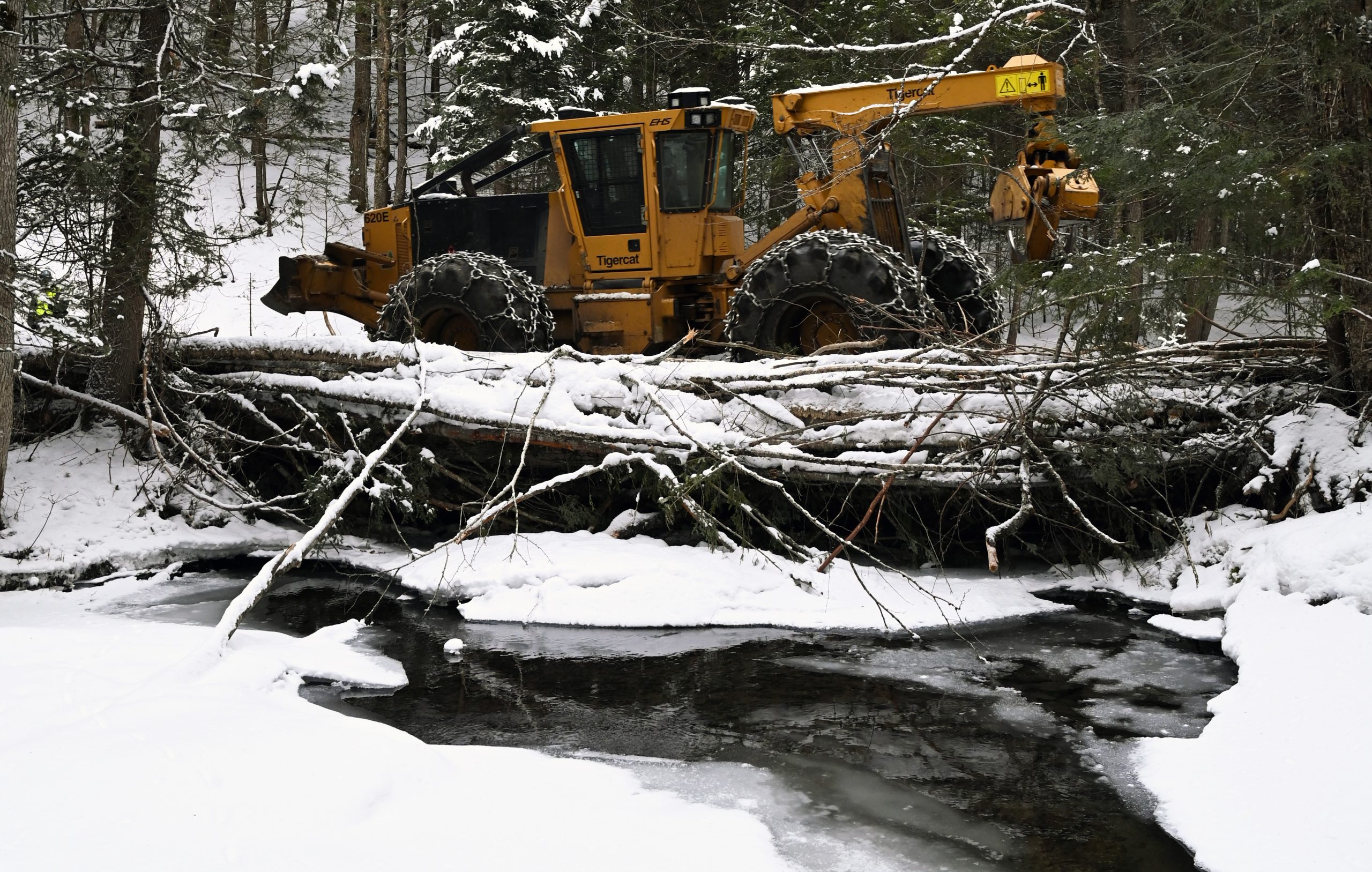
Since launching seven months ago, the program has helped loggers implement more than 100 water protection and climate adaptation practices on 34 sites, including hardening truck roads and landings, improving skid trails, and installing temporary and permanent stream crossings. It has been well received by the logging community and is enabling loggers to accomplish important water and forest health protection work that would otherwise be unaffordable in many instances.
The PLC is also encouraging Governor Phil Scott’s administration to support the recommendation for additional funding for the program.
“SLoCAMP is a win-win for the state and the logging industry,” Doran said. “This cost-share program is allowing loggers to do work that benefits everyone in Vermont, without shouldering 100 percent of the cost. It is important to remember that most loggers cannot pass along costs to protect water quality to remain cost competitive, and affording those additional costs right now when the industry is facing so many challenges is impossible for many without help.”
The PLC is the region’s only regional non-profit educational organization which exists to give independent logging contractors and sole proprietors a voice in the rapidly changing forest industry.
Founded in Maine in 1995 by a handful of loggers who were concerned about the future of the forest economy, the PLC has grown steadily to become a regional non-profit which provides independent logging and trucking contractors a voice along with a suite of other forest certification programs which are grounded in responsible forest management.
Learn more about the PLC at www.plcloggers.org